

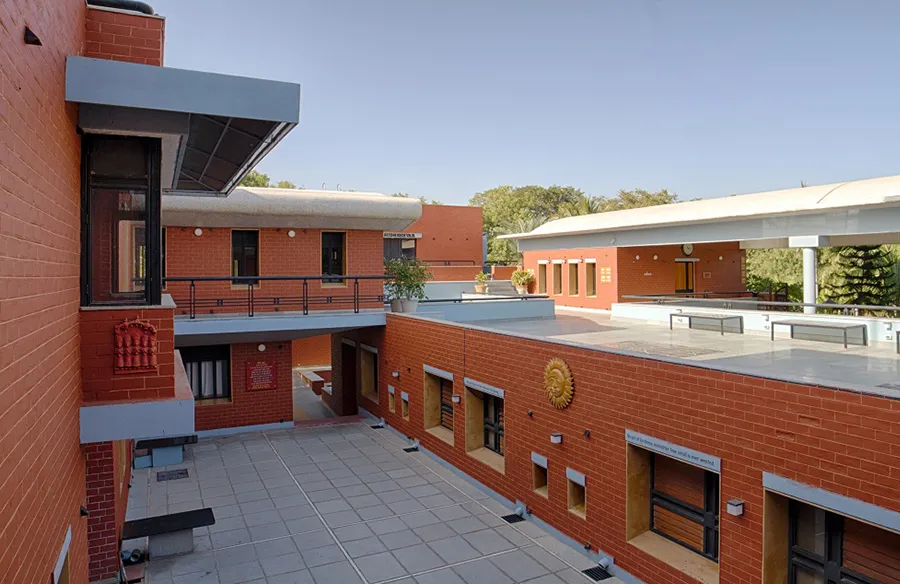
The Environmental Sanitation Institute (ESI), designed by Ar. Yatin Pandya in 1985, reflects Gandhian principles of simplicity, truth, and environmental responsibility. Known for pioneering sustainable design in India, Ar. Pandya created a campus that uses honest materials, informal spaces, and a harmonious red–white–green palette to evoke sanitation and wellbeing. The layout thoughtfully integrates institutional, residential, and future development zones through seamless built–unbuilt connections. With its low profiles, natural landscaping, and community-centric outdoor areas, ESI stands as an accessible, human-centric environment that encourages responsibility, interaction, and a sense of belonging for all visitors.
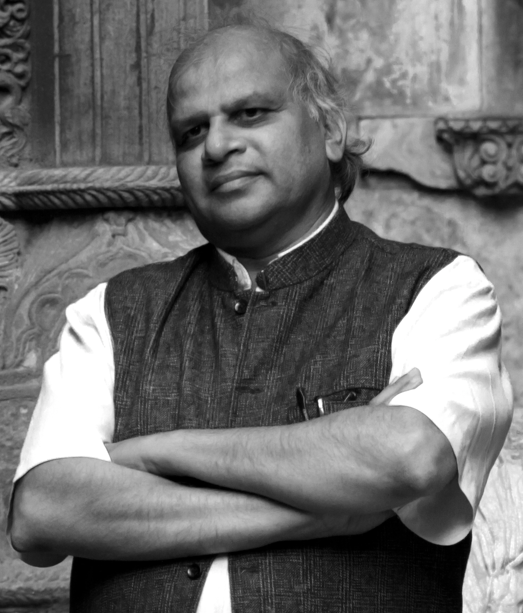
Ar. Yatin Pandya — an accomplished architect, author, activist, academician, and researcher — leads FOOTPRINTS E.A.R.T.H.(Environment Architecture Research Technology Housing). A graduate of CEPT University, Ahmedabad and a Master of Architecture from McGill University, Montreal, Ar. Pandya is regarded as a pioneer in sustainable design practices in India. His body of work spans city planning, urban design, mass housing, architecture, interiors, product design, and conservation.
Following Gandhian Values Through Design: Environmental Sanitation Institute (ESI) by Ar. Yatin Pandya
With over 200 published articles in national and international journals and globally published books such as Concepts of Space in Traditional Indian Architecture and Elements of Space Making, he has also produced more than 30 video documentaries on architecture. Among his notable works is the Environmental Sanitation Institute (ESI), designed in 1985 — a non-governmental institution committed to improving sanitation and quality of life for rural communities and urban poor across India.
Translating Gandhian Values into Built Form
Design Blueprint: Flow, Function Future-Readiness
The institute sits on a triangular site, with the entry plaza positioned at the southeast — the only road-facing edge. The meeting point of the triangular and rectangular land parcels naturally shapes two movement pathways: one guiding visitor into the institutional areas and the other leading to residential and service zones.
To the north lies a landscaped garden reserved for future development, flanked by an institutional corridor that acts as a bridge between built and unbuilt spaces. The southern half houses the residential and service facilities, creating a balanced spatial distribution.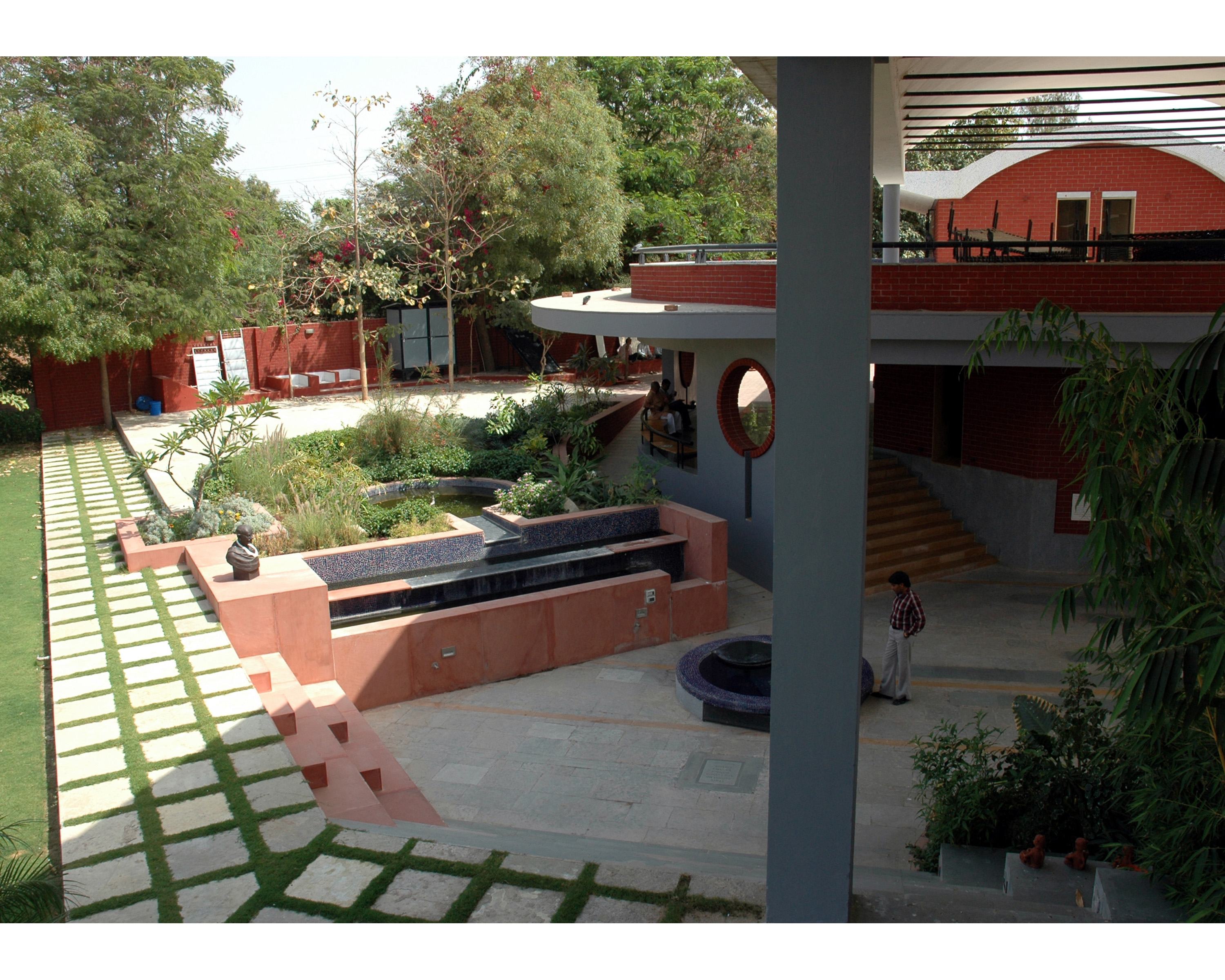
A Contrasting Yet Harmonious Palette
The ESI campus stands out through its clean and symbolic palette of red, white, and green: red exposed brickwork, white cement surfaces, and green landscaped elements weaving through the site. This palette subtly reinforces themes of sanitation, purity, and wellbeing.
Design features such as informal spatial organization, low skylines, ground-hugging building profiles, simple materials, and roof-driven visual experiences create an environment that is earthy, accessible, and relatable.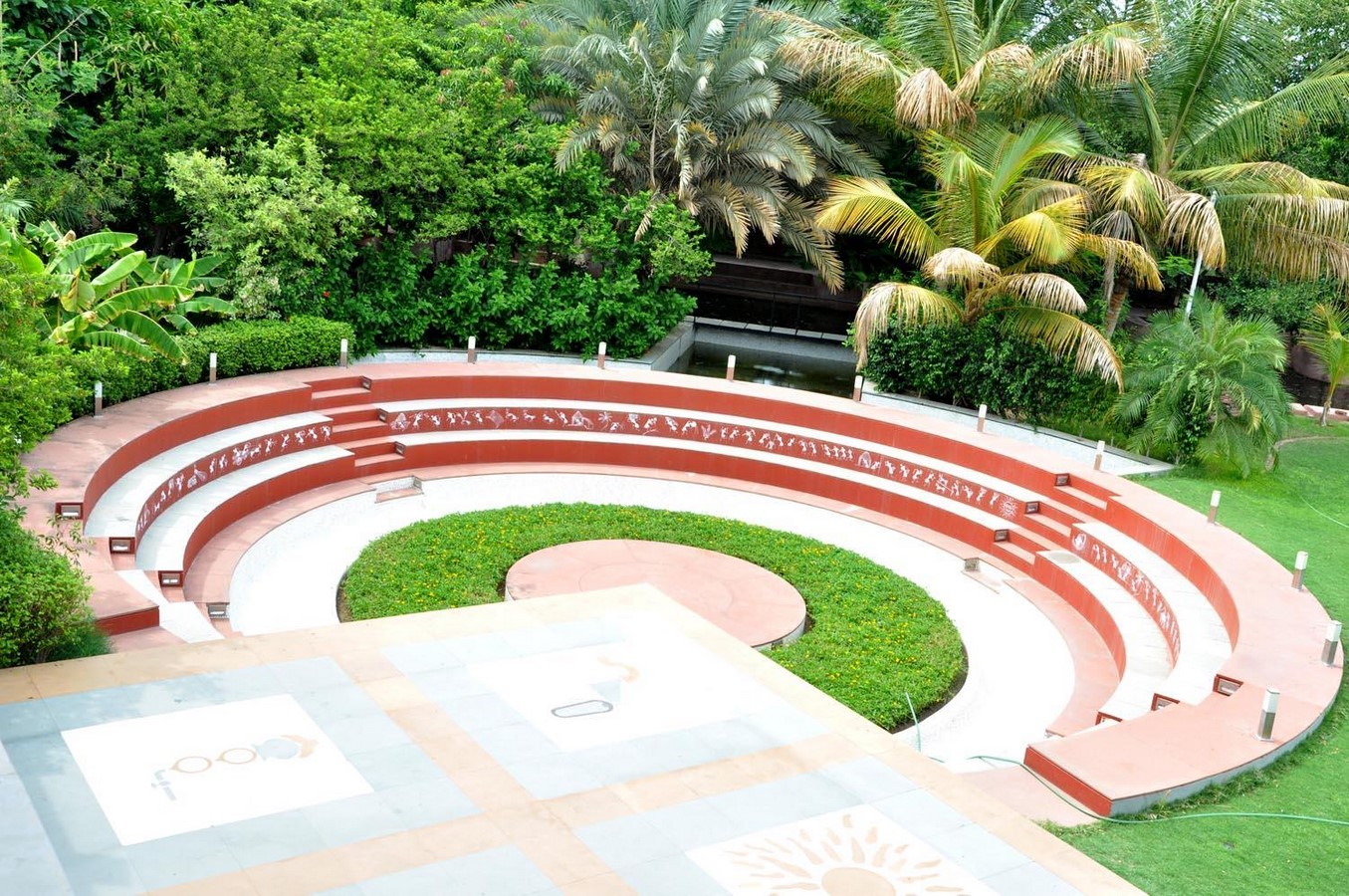
Spaces Designed for All
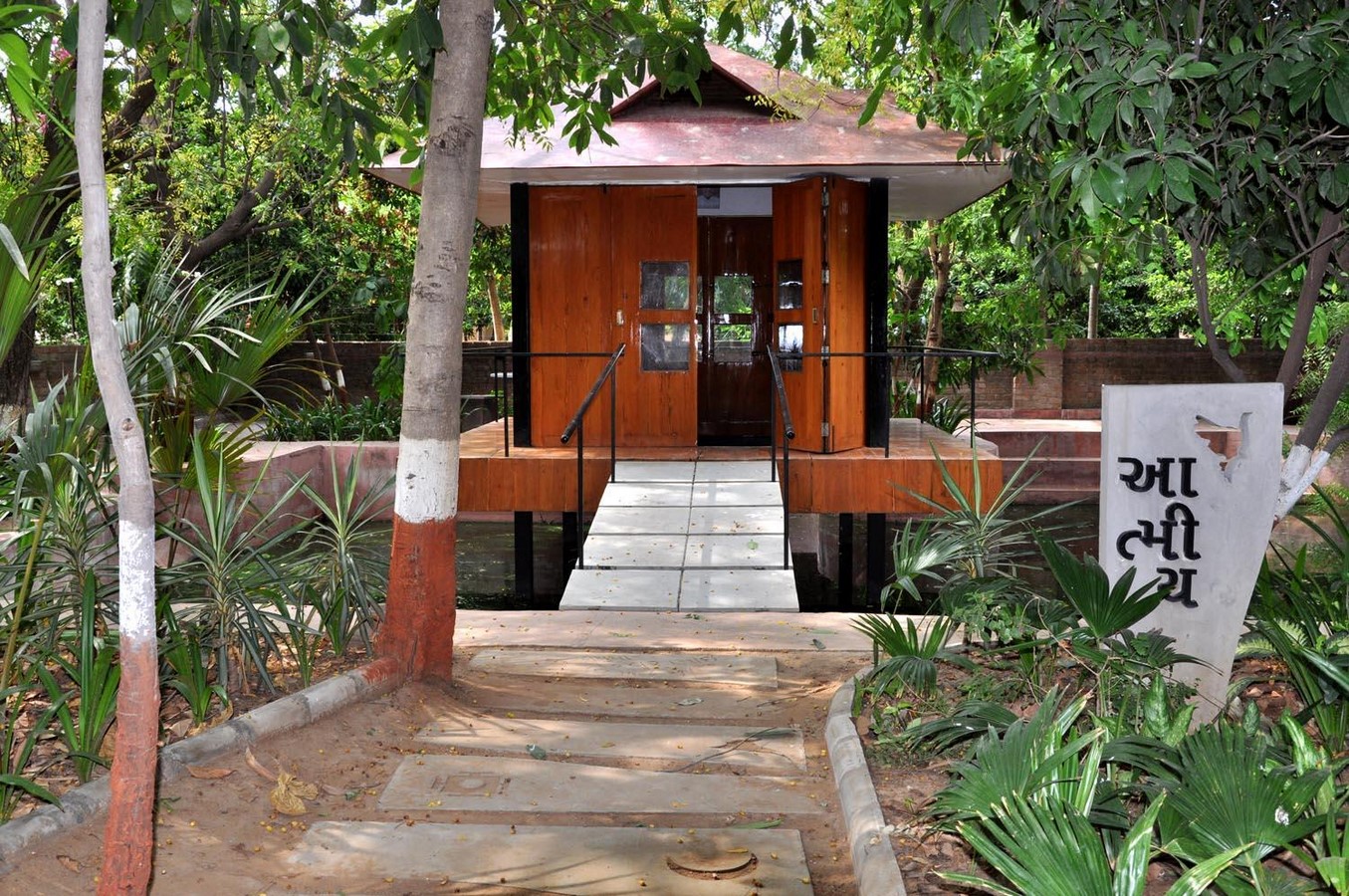
The architect’s intention was to build a place where every visitor feels a sense of belonging — and responsibility for the space. Outdoor and indoor environments are treated with equal importance. Long corridors, multiple junctions, and seamless connectivity evoke the feeling of walking through a natural woodland, while built-in seating around mature trees encourages communal gatherings.
Informal and formal interaction zones are consciously spread across the campus, embodying the core idea that good design should serve everyone.